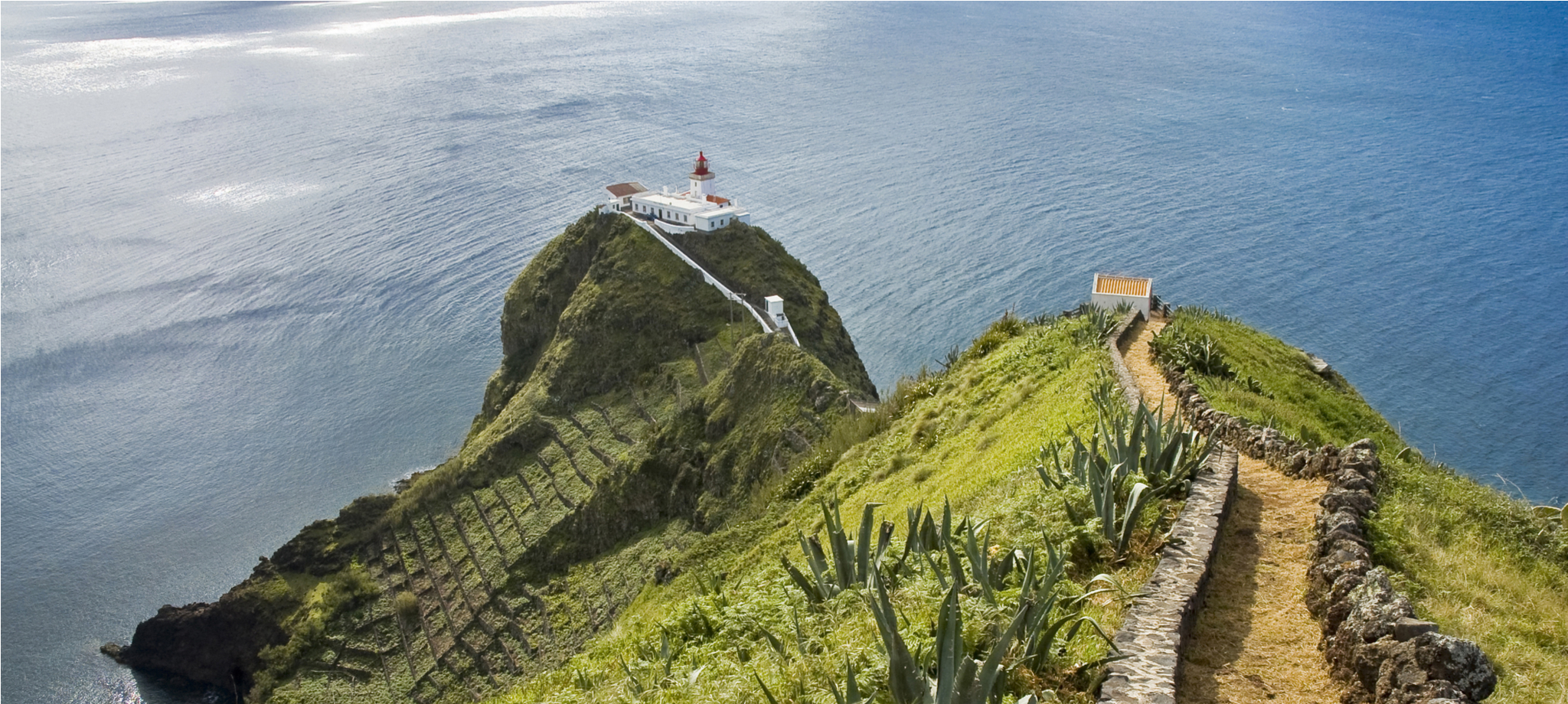
Faial Island
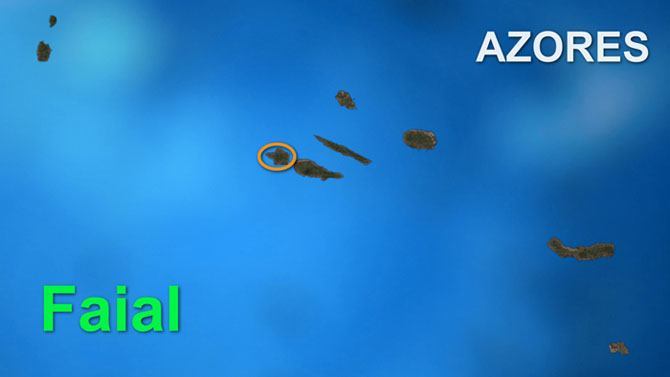 Faial Island (the blue island) is part of the Azores central group. It is located about 66 miles from Terceira, 4.5 miles from Pico and 11 miles from S. Jorge. The surface area of Faial Island is approximately 67 square miles (173 km2). The island has about 15,000 inhabitants and its main municipal seat is located in the city of Horta. Different colours of blue decorate the houses and divide the fields and line the roadsides giving Faial the name “Blue Island”.
In the 18th century the development of whaling brought the early whaling fleets to Horta. By the 19th century Horta had become an important sea port and a stopping point for a large number of yachts crossing the Atlantic.
In 1957 a great volcanic eruption from the “Ilheu dos Capelinhos”, about 1 km from the coast, projected large quantities of lava and ash forming an islet that later became connected to Faial island by an isthmus.
The green circle of a volcanic cone at the top of a hill; white houses in towns mirrored on the ocean; the masts of sailing boats sailing from all over the world; the ochre walls of a fortress that has witnessed countless naval battles; the unforgettable sight of sunrise with the island of Pico in the background; the quiet inlets with beaches of soft sand; the hydrangeas standing out against the landscape framing houses and roads; all this contributes to the beauty, aesthetic, and cultural depth of the “Blue Island”.