Azores.com

           Login Register 


 -  Password? | Username?  -

Close
*
*
*
*
*

Fields marked with an asterisk (*) are required.

Close


English Português
| Share : |
    AirAirAir FerryFerryFerry HotelHotelHotel CarCarCar PackagesPackagesPackages Excur's & FunExcur's & FunExcur's & Fun Travel DeskTravel DeskTravel Desk

Discover

AzoresAzoresAzores
Santa MariaSanta MariaSanta Maria
São MiguelSão MiguelSão Miguel
TerceiraTerceiraTerceira
GraciosaGraciosaGraciosa
São JorgeSão JorgeSão Jorge
PicoPicoPico
FaialFaialFaial
FloresFloresFlores
CorvoCorvoCorvo
Real EstateReal EstateReal Estate
Maps & POISMaps & POISMaps & POIS

Events Calendar

<< Feb 2012 >> 
 Mo  Tu  We  Th  Fr  Sa  Su 
    1  2  3  4  5
  6  7  8  9101112
13141516171819
20212223242526
272829    

Like us!

FacebookNew

Graciosa Events

Festival Ilha Branca
You are here : Graciosa

  • About
  • Activities
  • Events
  • Gastronomy
  • Handicraft
  • Local Products

About

Poster Image

Download Video: MP4, HTML5 Video Player by VideoJS

  • The Island

  • History

  • Geography

  • Economy

  • Points of Interest

image of graciosa island - Azores
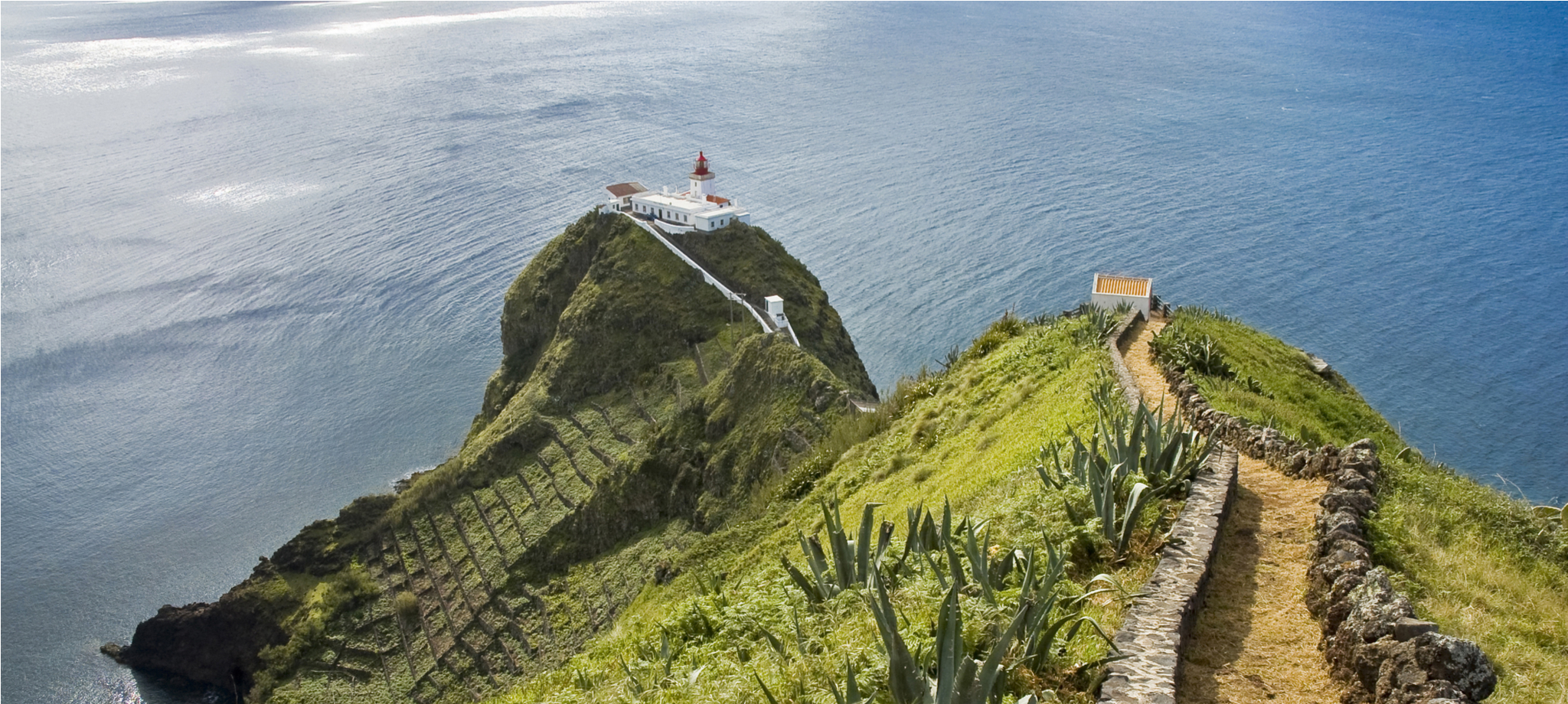
Approximately 31 miles from Terceira lay the island of Graciosa (gracious in English). It has a surface area of 24 square miles (61 km2). It is called the white island due to the landscape and the names given to certain places like "Pedras Brancas" or White Stones, "Serra Branca" or White Mountain, and "Barro Branco" or White Clay. The island has about 4,600 inhabitants. The main municipalities are "Santa Cruz" and "Lajes".
 
The islets along the coast of Graciosa add a peculiar beauty to the islands. The "Praia" Islet, totally covered by vegetation, and the "Baleia" Islet, named this way because of it has shape of a whale.
 
The undulating wheat-fields; green and purple vineyards; The vanes of windmills revolving in the wind; The color of the vineyards; The mirror formed by a lagoon hidden in the depth of the earth; The peace and quiet of country life; The nectar of delicious wines. All this are attractions of Graciosa, which also offers, in dramatic beauty, the rainbow colors of underwater life.
Tweet
Graciosa's discovery date is uncertain although it probably took place as the result of the activity of seafarers from nearby Terceira island. The only certainty is that it received cattle by order of Prince Henry the Navigator and that it already had settlers by the middle of the 15th century.
 
The pioneer and land-clearer of the island was Vasco Gil Sodra, a native of Montemor-o-Velho in Portugal, who was accompanied by his family and servants. He built his house at Carapacho, where he first landed. In spite of the efforts made by Vasco Gil Sodra to become the island's donee and the fact that he built a custom-house on it, the captaincy of the northern part was given to Pedro Correia da Cunha, married to the sister of Cristopher Columbus's wife, and the southern part to Duarte de Barreto.
 
The growing population (originating, according to some historians, in the Beiras and Minho regions of Portugal and also in Flanders) and prosperity of the island led to town charters being granted to Santa Cruz in 1486 and Praia in 1546. The names of the great families who contributed to the settlement and growth of the island are still to be found among its inhabitants. Devoting its energies to agriculture and viniculture from the very outset, Graciosa was already exporting wheat, barley, wine and brandy in the 16th century.
With a predominantly agricultural economy, carrying on all its trade with Terceira, which had a port frequented by large ships and which was the economic and administrative center, Graciosa suffered from attacks and pillaging by corsairs in the 16lh and 17th centuries.
 
Several historical figures have visited Graciosa over the centuries. The first was Father Antonio Vieira, the famous 17th century Portuguese writer. When the ship on which he was sailing from Lisbon was wrecked, he was picked up by a Dutch privateer who put him ashore on Graciosa, where he stayed for two months. He was followed by Chateaubriand, who visited the island when he was heading towards America, fleeing from the French Revolution. The French author mentions his stay there in several of his works. Almeida Garrett, who introduced Romanticism style in Portugal, lived there for some time in 1814 when, at the age of 15, he visited an uncle who was a judge there. As a young man, Garrett wrote verses on the island revealing his talent as a poet from an early age. Finally, in 1879 Prince Albert of Monaco, who was outstanding for his hydrographical work and studies of marine life, called at Graciosa on his yacht Hiroudelle and visited the cavern called Furna da Caldeira.
 
Concentrating on agriculture, livestock raising and the dairy industry, Graciosa has preserved its characteristics as a quiet rural island while accompanying and participating in the progress of the Azores.
 
Resulting from general emigration to the United States during the 1950s to 1970s, Graciosa has undergone a general decrease in demographics that has affected the socio-economic stability of the island community.
 
In 2010, the island of Graciosa joined the international network for verification of the Comprehensive Nuclear Test-Ban Treaty through the installation of monitoring station.
Tweet
Coordinates: 39°03′05″N 28°0′51″W
 
The oval shaped island of Graciosa has an area of 24 square miles (61.66 km2), with a length of 8 miles (12.5 km) and a maximum width of 5 miles (8.5 km). Low-lying and flat in the northern and north-eastern areas, it rises gradually until the altitude of 398 meters is reached at Pico Timao, located at the center of the island.
 
Graciosa Island is situated in the northwest tectonic structure called the Terceira Rift"", oriented southeast to northwest and coincident with the orientation of the archipelago. The presence of the rift has deformed Graciosa into an elongated oval form 12.5 km long by 8.5 km wide.
 
The coast is rough and rocky but generally low, except in the northwest along the Serra Branca (where the cliffs are 200 meters high). There are two shallow bays, situated in the southeast and southwest corresponding to fishing ports in Vila da Praia and Folga, respectively. Along the northeast coast there are several smaller coves near Santa Cruz da Graciosa that were used as ports but are now abandoned, and the older whale and commercial port in Barra, now used as a recreational zone.
Tweet
Owing to concentration of agriculture, animal husbandry and dairy industries, Graciosa has maintained the relatively rural and tranquil character. The island's fields produce various fruits, wines, grass-fed beef and dairy cattle as well as cheese and other dairy products. The construction of a commercial port and the 1980 construction of the Graciosa Aerodrome have retained the islands links to the archipelago, while strengthening exports and importing goods and services. In addition to this, Graciosa has benefited from infrastructural investments that have included the re-qualification of the secondary school, the construction of a new milk factory and fishing port. As well, improvements to the recreational areas in Praia and refurbishment of the Thermals in Carapacho, the construction of a new hotel and Medical Center have been done in order to improve both the tourist industry and support the local community.
Tweet
Owing to concentration.
 
Ethnographic Museum which contains items related to the culture of wine and the now gone whaling industry.
 
"Monte de Nossa Senhora da Ajuda" overlooking the town of Santa Cruz.
 
The "Furna do Enxofre" (Sulfur Cavern), in the interior of the "Caldeira", or crater of a former Volcano there's a tunnel about 330 feet (100 m) deep and has a lake filled with cold sulfur water.
 
It is possible to visit other caverns such as "Bolos, Lembradeira, Manuel de Avila, Labarda, Furada, Linheiro, Cardo, Gato, Castelo, Calcinhas, Queimado, Vermelho, Cao, Urze and Luis".
 
From the "Timao" summit, at an altitude of 1300 feet (398 m), and the "Facho" summit, at an altitude of 1230 feet (375 m), as well as from the "Dormida, Branca and Fontes" mountains you can get a glimpse not only of the island, but of the surrounding ocean and the islands of Terceira, São Jorge, Pico and Faial.
 
The "Carapacho" Hot Spring Baths with medicinal waters.
Tweet
Previous
Next

Activities

Bird Watching

Bird watching, a hobby in all islands

#

Whale Watching

Whale watchers paradise

#

A port of call for all yachtsmen

In Horta - Faial

#

Big Game Fishing

Best fishing in the Atlantic

#

Hiking

Excellent hiking and trekking

#

Whale Watching

Courtesy of Picos de Aventura

#

Golf

Golf in S. Miguel and Terceira

#
http://www.azores.com/components/com_gk2_photoslide/images/thumbm/290034PhotoACT1.jpg
http://www.azores.com/components/com_gk2_photoslide/images/thumbm/305969PhotoACT2.jpg
http://www.azores.com/components/com_gk2_photoslide/images/thumbm/902271PhotoACT3.jpg
http://www.azores.com/components/com_gk2_photoslide/images/thumbm/825068PhotoACT4.jpg
http://www.azores.com/components/com_gk2_photoslide/images/thumbm/594417PhotoACT5.jpg
http://www.azores.com/components/com_gk2_photoslide/images/thumbm/841707PhotoACT6.jpg
http://www.azores.com/components/com_gk2_photoslide/images/thumbm/670196PhotoACT7.jpg
News Image

...

News Image

...

News Image

...

News Image

...

News Image

...

News Image

...

News Image

...

Graciosa features two small beaches of soft sand at Praia and a natural pool at Carapacho. Formed by volcanic rocks, Graciosa satisfies the needs of swimmers and sunbathers, with its sunshine and the sea. Praia and Santa Cruz da Graciosa offer good natural conditions for the practice of sailing, windsurfing and water skiing.

It is nevertheless the marine depths along the coast of Graciosa that provide the major attraction for those who like to spend their holidays with ocean activities. The transparent waters hide grottoes and rocks with strange shapes and varied colors covered with seaweed and mollusks. The wealth of fish of all sizes and colors thrills divers and making them feel they have plunged into a world made up of shining shoals. The whole coast of Graciosa provides excellent conditions for diving. Fishing from rocks or boats allows interesting catches of barracuda, oceanic bonito, scorpion-fish, conger eel, bream, amberjack, comber, fork beard, moray eel, grouper, wrasse, pork-fish, perch, octopus and lobster.

Hunters can set their sights on rabbits, quail and pigeons.

Gracisoa features a sulfur cavern “Gruta do Enxofre†of rare volcanic phenomena. A winding staircase takes you down to an enormous vault featuring a lake with lukewarm sulfurous water. The vault has a diameter of 128 meters with a ceiling 81 meters high at a depth of 102 meters). Visits are best appreciated between 11am and 2pm when sunlight penetrates through a narrow opening, bathing the interior with beautiful light.

Graciosa also features rift-valleys for the trekker; Furna dos Bolos, Manuel de Avila, Cardo, Cao, Gato, Queimado, Labarda, Furada, Linheiro, Lembradeira, Castelo, Calcinhas, Vermelho, Luis and Urze. 

Events

Sata Rallye Azores

Event included in the IRC Challenge.

#

Festivities of Our Lord of Miracles.

The biggest religious festivals in the Azores.

#

Sanjoaninas

Feasts of St. John in Angra, Terceira Island.

#
News Image

...

News Image

...

News Image

...

The enthusiasm and color of Portuguese pilgrimages is renewed every year in the Festivals of “Senhor Santo Cristo dos Milagresâ€, held at the town of Santa Cruz da Graciosa, specially decorated for the occasion. The ceremonies attract people from all over Graciosa and from other islands as well as Azorean emigrants in North America. They are held every year in August.

Graciosa Festivals of the Holy Ghost are a symbol of the devotion of the Azoreans and an expression of a cult with medieval roots. They enliven the villages on Sundays with the procession of the "emperor", the showy decoration of the chapel called "theatre" or "empire" and the "bodo" or banquet in which wine and food are distributed. The festivals are repeated all over the island after Whitsun and they join together local residents and outsiders in the same religious and festive spirit. 

Gastronomy

Alcatra

A typical dish of Terceira Island.

#

Cozido nas Furnas

Cooked in the boilers of Furnas,in São Miguel.

#

Sopas do Espírito Santo

In Santa Maria, the tradition remains unchanged.

#

Biscoitos de Orelha

Wares typical of Santa Maria.

#
http://www.azores.com/components/com_gk2_photoslide/images/thumbm/958494PhotoGAS1.jpg
http://www.azores.com/components/com_gk2_photoslide/images/thumbm/772521PhotoGAS2.jpg
http://www.azores.com/components/com_gk2_photoslide/images/thumbm/209777PhotoGAS3.jpg
http://www.azores.com/components/com_gk2_photoslide/images/thumbm/363550PhotoGAS4.jpg
News Image

...

News Image

...

News Image

...

News Image

...

In Graciosa fish abounds off its coast and holds the place of honor in the local cooking traditions, in the form of delicious fish stews and baked parrot fish. The local lobsters and spider-crabs are an exquisite meal in themselves while the smaller crabs and goose barnacles can serve as tasty appetizers.

The focal sweets are rich and varied and include not only cheese-cakes (queijadas) but specialties with such names as encharcados de ovos, capuchas, bolos de junça, cavacas, barrigas, pasteis de arroz, escomilhas and massa sovada, the last mentioned being connected with the Holy Ghost Festivals.

To accompany the meal there is the famous white wine of Graciosa, light, dry and fruity, or then the wine called “vinho de cheiro†that accompanies all the festivals in the island. The brandy, aged in casks, is an excellent digestive and those who like sweet drinks have the locally produced wine called “angelicaâ€.

"Biscoitos" vines. The first settlers came from lands where vine growing was a centuries-old tradition. When they saw the lava beds called biscoitos, sunny and only slightly damp, that covered part of the island, they immediately set to work and by dint of hard work managed to plant the vine shoots brought from the continent. This marked the birth, in the early 16th century, of the vineyards that cut the landscape up into rectangles of black stone. The phylloxera disease ravaged the vineyards in the 19th century but the initial “verdelho†strain was joined by “arinto†and later by “terrantasâ€, which ensured the survival of the vines on the island.  

Handicraft

Scrimshaw

Works made ​​of bone and whale tooth.

#

Ceramics

Common in San Miguel, in the village of Lagoa.

#

Miolo de Figueira

Work from fig tree pith.

#

Embroidery

Beautiful pieces of artwork

#
http://www.azores.com/components/com_gk2_photoslide/images/thumbm/689421PhotoART1.jpg
http://www.azores.com/components/com_gk2_photoslide/images/thumbm/510102PhotoART2.jpg
http://www.azores.com/components/com_gk2_photoslide/images/thumbm/500749PhotoART3.jpg
http://www.azores.com/components/com_gk2_photoslide/images/thumbm/185548PhotoART4.jpg
News Image

...

News Image

...

News Image

...

News Image

...

Being an island absorbed in farm work and fishing, Graciosa's handicraft is concentrated on agricultural crafts that often repeat ancestral models that deserve to appear in ethnographic museums: ploughs and yokes, harrows and rudimentary fishing tackle. The existence of clay deposits allowed a ceramics tradition which, in picturesque potteries, produced pieces for daily use and vases, tea-pots and mugs of elegant design. The regional guitar, which enlivens every Azorean balho or dance with its characteristic sound, is produced on the island by skilful craftsmen who transform the wood into sonorous and delicately decorated instruments.

Local Products

Pineapple

Only grown on the island of Sao Miguel.

#

Cheese

Found in all the islands, the best known is the cheese of St. George.

#

Wine

Here you can find the famous Pico Verdelho wine.

#
http://www.azores.com/components/com_gk2_photoslide/images/thumbm/839614PhotoPRLOC1.jpg
http://www.azores.com/components/com_gk2_photoslide/images/thumbm/493826PhotoPRLOC2.jpg
http://www.azores.com/components/com_gk2_photoslide/images/thumbm/127368PhotoPRLOC3.jpg
News Image

...

News Image

...

News Image

...

Graciosa’s local products include the typical Azorean handicraft as well as music instruments such as the “guitarra de Sao Mateus†(Sao Mateus guitar).

Tweet

Sponsors

Recommended

Reset

about us | contact us | partner with us | advertise with us | privacy statement | terms and conditions | testimonials | sitemap

Copyright © 1996 - 2012 Portugal Online - All Rights Reserved | Custom Design by 1ms.pt |PROCONVERGENCIA AÇORES
 Top